Bedding · Fabric guide
Affordable Sheets, Better Choices: Comparing Linen and Cotton Percale
A sensible sheet purchase begins with a quiet question: what do you actually want to feel when you get into bed? Linen and cotton percale can both make breathable, dependable bedding, but they arrive at comfort by different routes. The useful comparison is not simply which costs less, or which number on a label looks more impressive. It is how the fabric feels, how it fits, what its care asks of you, and whether it earns its place through regular use.
There is a particular comedy to shopping for sheets. The object is simple—cloth, cut and sewn to fit a bed—yet the language surrounding it can sound like a cabinet of mysterious instruments. Thread counts rise like scores in a competition. Words such as “hotel,” “luxury,” and “cooling” appear with the confidence of facts. A price tag may be presented as though it were a verdict on quality. Meanwhile, the shopper is trying to answer a more ordinary question: will these sheets be comfortable on a Tuesday, after several washes, when there is laundry to fold and no special occasion in sight?
For budget-conscious buyers, that practical question is the right place to start. Linen and cotton percale are both worth understanding because each can offer a breathable sleep surface, yet their textures, construction, and maintenance differ. Neither fabric is automatically the better value. The best choice depends on what you notice, what you tolerate, and how the sheets will be used.
First, separate the fiber from the weave
One source of confusion is that fabric labels often mix together two different ideas. Fiber describes what a textile is made from; weave describes how its threads are arranged. Linen is made from flax fiber. Cotton percale is cotton woven in a plain, one-over-one-under structure. Comparing linen with percale is therefore not quite a comparison of two fibers: it is a comparison between a fiber and a type of cotton fabric construction.
This distinction matters because the feel of a sheet is not determined by fiber alone. The yarn, weave, finishing, fabric weight, and sewing all contribute. A linen sheet may feel crisp and substantial, or softer and more relaxed, depending on how it has been made and finished. Percale is commonly associated with a smooth, matte surface and a crisp hand, but cotton quality and finishing still make a difference. Labels can help, but they rarely tell the whole story.
For a shopper trying to find affordable bed sheets, this is good news. There is no single magic specification that guarantees comfort. You can pay attention to the parts that affect your use—composition, fabric feel, pocket depth, wash instructions, and construction—rather than letting a single marketing number make the decision for you.
Linen: texture, drape, and a slower softness
Linen has a surface that is difficult to mistake for anything else. Its texture is visible and tactile: slightly irregular, gently nubby, and rarely as uniform as a polished cotton fabric. On a bed, linen tends to fall in a relaxed drape. It wrinkles, and the wrinkles are not usually a sign of failure. They are part of the fabric’s appearance, which can read as casually lived-in or simply untidy, depending on the observer and the morning.
That texture is a preference, not a flaw to be corrected. Some people like the way linen feels cool and dry against the skin and enjoy its character as it softens with use. Others prefer a smoother, more even surface. Linen can also feel firmer at first than a well-worn cotton sheet. That initial hand, and the prospect of gradual change, are worth considering before committing to a full set.
Linen is made from flax, and linen fabrics are often valued for their breathability and ability to manage moisture. How any particular sheet performs depends on its construction and the conditions in which it is used, so broad claims about temperature should be treated as tendencies rather than promises. A breathable sheet may feel welcome to a warm sleeper, but it cannot control room temperature, bedding layers, or a mattress that holds heat.
Care is generally straightforward, though the exact label should lead. Many linen sheets can be machine washed on a gentle cycle and dried on low, while some makers recommend cooler water and prompt removal from the dryer. Avoiding over-drying helps limit unnecessary wear and may reduce harsh creasing. Fabric softener is not always needed; repeated use can leave residue, and individual care instructions vary. The aim is not to preserve a showroom finish. It is to keep the cloth clean without making laundry more complicated than it needs to be.
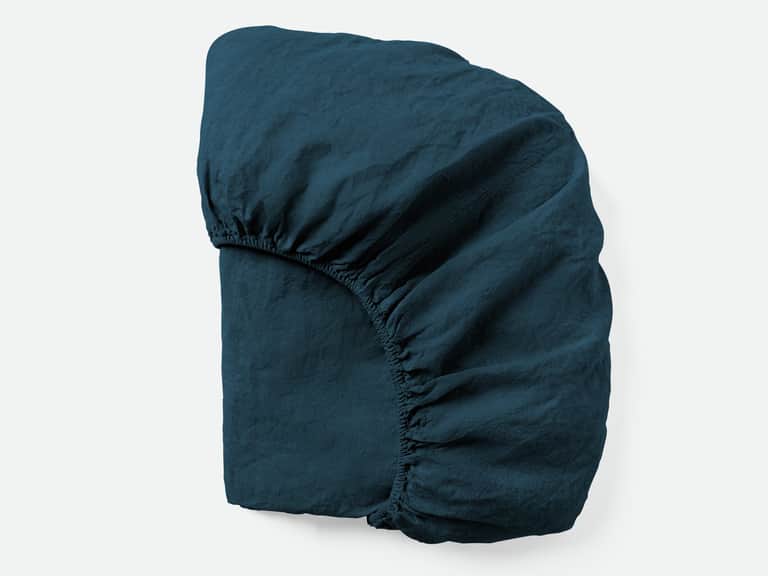
For a concrete example of the details worth checking, the Organic Relaxed Linen Fitted Sheet is described as French-grown organic flax woven into linen in Portugal. Its listing specifies a 15-inch pocket, full elastic, pick-stitched cuffs, cold gentle washing, and low-heat drying. Those particulars illustrate useful questions to ask about any fitted sheet; they are not evidence that every linen sheet shares the same construction or care requirements.
Cotton percale: crispness without much ceremony
Percale is a plain weave, and that structure helps explain its characteristic feel. The surface is matte rather than shiny, and many percale sheets feel crisp, light, and smooth. The effect is often compared with a freshly laundered shirt or a hotel bed, though the comparison can obscure an important point: percale is not a single standard of softness. The cotton fiber, yarn quality, finishing, and subsequent washing all shape the result.
New percale may feel notably crisp. Some people find that refreshing; others would rather not sleep on anything that seems to have opinions about posture. With washing and use, cotton percale often becomes more pliable. Its familiar plain weave also makes it a straightforward option for shoppers who want a relatively smooth, breathable cotton sheet without the sheen sometimes associated with sateen.
As with linen, breathability is a useful consideration, not a guarantee of a particular night’s sleep. A lightweight percale sheet may suit warm conditions or sleepers who dislike a heavy, brushed surface. But a fabric name alone cannot tell you how warm the whole bed will feel. A thick duvet, a mattress protector, room humidity, and personal comfort all play a part.
Percale sheets are often easy to incorporate into a household’s existing laundry habits. Many are machine washable and can be tumble dried on low, but care labels still take precedence. High heat and over-drying can contribute to wear, shrinkage, and a more wrinkled finish. If a sheet needs ironing to look smooth, consider whether that is a pleasure or a chore before buying it. A low-priced item that demands an elaborate routine may not feel like a bargain for long.
Thread count: a number with limits
Thread count is frequently treated as the headline measure of sheet quality. It is usually a count of threads in a square inch of fabric, but the number cannot, by itself, establish softness, durability, or value. Fiber length, yarn quality, weave, finishing, and manufacturing standards matter too. A large number on a package may look persuasive while telling you little about whether the sheet suits your preferences.
It is especially unhelpful to use thread count as a direct contest between linen and cotton percale. Linen and cotton are different fibers, and their textures arise from more than a single count. Percale’s appeal is often its crisp plain weave; linen’s appeal may be its textured hand and relaxed drape. A number cannot tell you whether you will enjoy either sensation. When comparing cotton percale sheets, thread count can be one point of information, but it should sit beside fiber content, weave, finish, dimensions, and care instructions—not in place of them.
There is also a difference between a measurable specification and a meaningful one. A label that tells you the fitted sheet’s pocket depth is directly useful if you have a tall mattress or a topper. A composition label can tell you whether the fabric is cotton, linen, or a blend. A care label can reveal whether the sheet fits the way you actually do laundry. Those details may be less glamorous than a large thread-count figure, but they are often more consequential.
The fitted-sheet problem: measure before you choose
Even a fabric you love can become an irritating purchase if the fitted sheet will not stay on the mattress. Mattress depth varies, and toppers add more height. Before buying, measure from the bottom edge to the top surface, including any topper or pad you plan to leave in place. Then compare that measurement with the stated pocket depth and look for practical construction details such as elastic around the full perimeter.
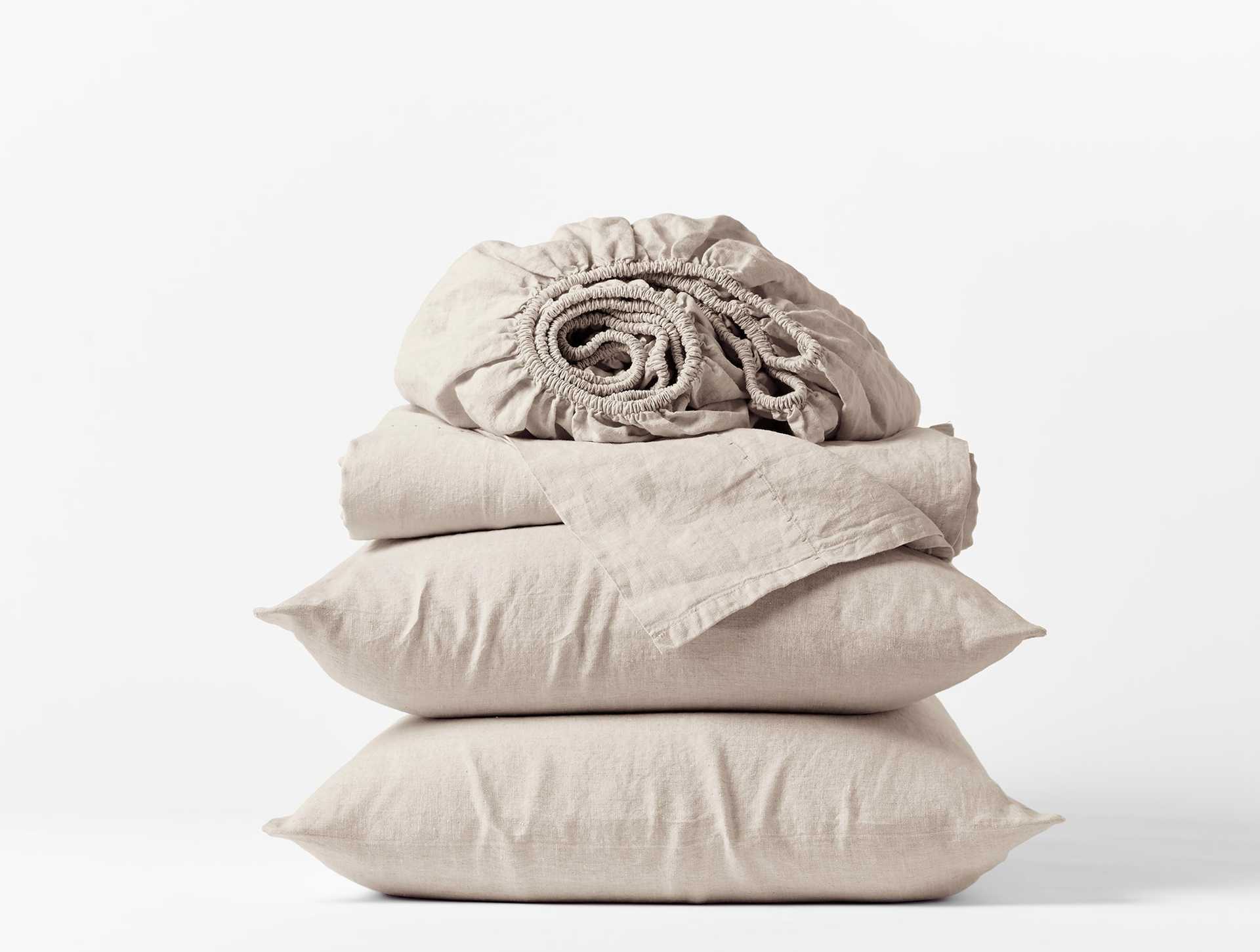
A fitted sheet with too little depth may pull loose at the corners. A sheet that is much deeper than necessary can feel baggy, depending on its design and the mattress. Product descriptions sometimes list a maximum mattress depth; when they do, use it rather than relying on vague wording such as “deep pocket.” For a sheet set, confirm what is included and check the pillowcase sizes as well. The term “set” is not a universal promise that every bed in the household will be outfitted in the same way.
These checks are particularly valuable when shopping online, where touch is unavailable and photographs can make fabric seem more uniform than it is. Dimensions and construction do not replace a tactile impression, but they reduce the chance of an avoidable mismatch. If you can visit a store, feel the fabric after first checking its composition. If you cannot, read descriptions for specifics rather than adjectives alone.
What “affordable” should mean
Affordable does not have to mean the lowest number on a shelf. It can mean a sheet that fits correctly, feels pleasant enough to use repeatedly, and survives a reasonable laundry routine. A very inexpensive set may make sense for a guest room, a temporary living situation, or a household that wants extra rotation. Another shopper may prefer to spend more on one set of sheets used every night. The circumstances differ; so does the sensible calculation.
One way to think about value is cost per use. This is not a precise prediction—no one can know exactly how long a sheet will last in every home—but it encourages a better question than “Which one is cheapest today?” If a sheet is used frequently, washed often, and remains comfortable over time, a higher initial cost may be spread across many nights. Conversely, paying more for a fabric you dislike does not create value merely because it was marketed as durable.
Be cautious about assuming that natural fiber automatically means longevity, or that a lower price automatically signals poor construction. Look for consistent stitching, a reliable closure where relevant, clear dimensions, transparent fiber information, and care instructions you can follow. When comparing products, compare like with like: a single fitted sheet is not equivalent to a complete set, and a pillowcase pair is not a substitute for four pieces of bedding.
Organic certification may matter to shoppers who want information about how fiber was grown and processed. Certifications such as GOTS apply to defined standards, but a certification is not a comfort rating and does not make every certified product equally suitable for every sleeper. Treat it as one consideration among several, alongside price, fabric feel, fit, and care.
A practical comparison at a glance
- Choose linen if: you enjoy a textured surface, a relaxed drape, and a look that does not depend on perfect smoothness. You are comfortable with a fabric that may soften over time and are willing to follow its care instructions.
- Choose cotton percale if: you prefer a smooth, crisp, matte feel and want a familiar cotton construction. You are comfortable with an initially crisp hand that may relax with washing and with the ordinary upkeep cotton bedding requires.
- Compare the label for: fiber content, weave, fabric finish, fitted-sheet pocket depth, set contents, and washing and drying directions.
- Ignore as a shortcut: claims that one material guarantees better sleep, or that a single thread-count figure settles every question of quality.
This is not a contest with a universal winner. A person who loves the tactility of linen may find percale too plain; someone who wants a smooth surface may find linen’s texture distracting. One household may prize a fabric that dries quickly in a particular laundry setup; another may care more about how the bed looks without ironing. The right sheet is often the one whose small daily demands fit quietly into your life.
How to shop without getting lost in the bedding aisle
- Decide on feel first. Crisp and smooth, or textured and relaxed? This preference narrows the field more usefully than a vague search for “best sheets.”
- Check your mattress dimensions. Measure the mattress with its usual topper and confirm the fitted-sheet depth before ordering.
- Read the full composition. Look for the stated fiber and any blends. “Natural feel” is not the same information as a clear fiber-content label.
- Think about laundry. Consider washing temperature, cycle, drying method, and whether you are willing to iron. The sheet should suit your routine, not an imaginary one.
- Compare what is included. Confirm whether a purchase is a full sheet set, a fitted sheet, or pillowcases only, and verify the sizes.
- Set a budget around use. If possible, buy one set that meets your needs and see how it performs before replacing every sheet in the linen closet.
The better choice is the one you will use
Sheet shopping rewards a little skepticism and a little self-knowledge. Linen’s textured character and cotton percale’s crisp plain weave can both make comfortable bedding, but they are not interchangeable experiences. Their appeal lies in different sensations, and neither one deserves an automatic premium simply for having a particular name.
For shoppers looking for affordable sheets, the most dependable path is to examine the fabric, construction, fit, and care together. Do not mistake thread count for a complete quality report. Do not overlook a pocket depth that could decide whether the bed stays made. And do not buy a fabric because it promises an idealized bedroom if the material itself is not one you want against your skin.
A good sheet is a modest domestic achievement. It fits. It washes without becoming a project. It feels right at the end of a long day. If linen offers the texture you enjoy, or cotton percale gives you the clean, crisp surface you prefer, either may be the practical choice. The value is not in winning a comparison chart. It is in finding bedding you can afford, care for, and look forward to using.